BY TASEKHAYA DLAMINI
For Sandile Mpumalanga Ginindza, public health is more than numbers. His journey from Eswatini to the United States, the Netherlands, South Africa and the International AIDS Conference in Rio has strengthened his commitment to home-grown solutions, stronger health systems and future leaders. In this edition ofCareer Chat, he reflects on his journey from learning to “count loss” to using data and evidence to help reduce it.
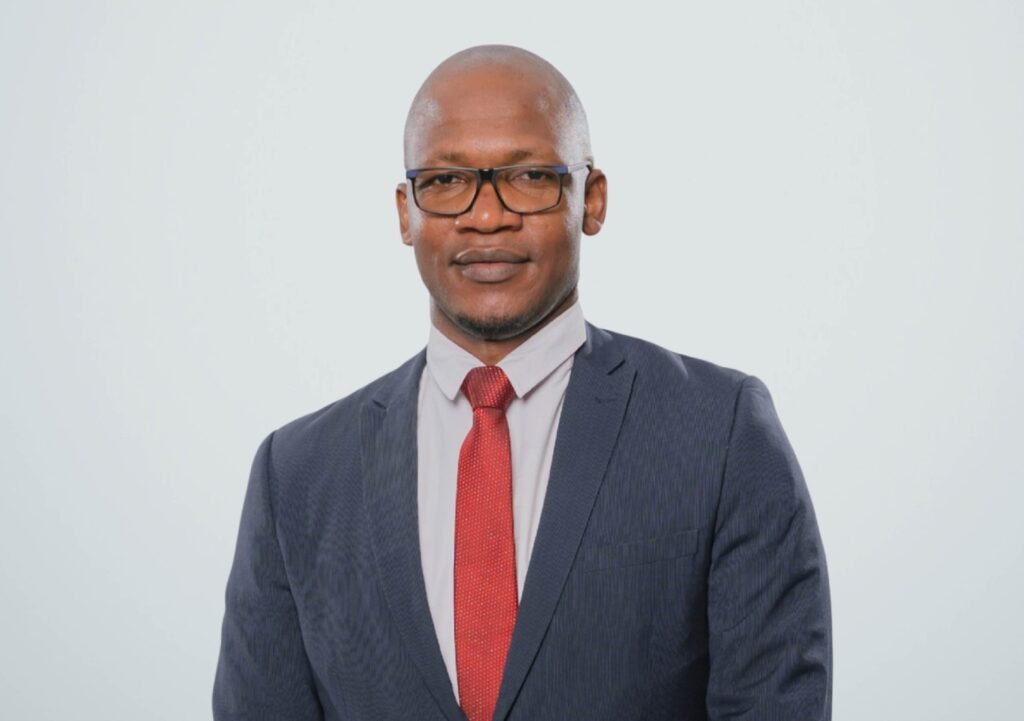
Tasekhaya: What first sparked your interest in public health?
Sandile: I grew up during the late 90s and early 2000s in an Eswatini that was losing people. Funerals were weekly, and classmates disappeared from school when a parent died. I enrolled at the University of Swaziland to study Social Sciences, majoring in demography and sociology, seeking skills in population dynamics, statistics and research methodology.
I thought I had chosen a technical discipline. Instead, I was learning how to count loss, and eventually how to reduce it. My career began in 2008 at The AIDS Information and Support Centre as a Research, Monitoring and Evaluation Officer. Those registers were never spreadsheets to me. Every line was a person who had completed treatment or had not, and I wanted to know why.
Tasekhaya: Your career has evolved through M&E, strategic information and public health. When did you realise this was the path you wanted to pursue?
Sandile: I realised this at the Ministry of Health’s Strategic Information Department, where credible data shifted decisions from the loudest voice to the strongest argument. A 2011 postgraduate certificate in TB/HIV collaborative implementation with The Union in France confirmed that measurement is advocacy for people absent from the room. I began seeing M&E not as support, but as a powerful tool for directing scarce resources to save lives—sparking my interest in research, surveillance and strategic information.
Tasekhaya: Looking back at your early career, what experiences helped shape you into the leader you are today?
Sandile: Three experiences stand out. First, as a young analyst persuading seasoned nurses and managers to improve data recording, I learned that technical accuracy means little without influence. Second, leading monitoring, evaluation and data quality for CDC- and PEPFAR-supported HIV and TB programmes taught me accountability for results delivered by people I did not supervise. Third, lecturing at the Institute for Development Management showed me that clarity is a leadership skill. Together, these experiences taught me to lead through influence and help others grow.
Tasekhaya: How did your experience in Monitoring & Evaluation transform the way you approach public health challenges?
Sandile: Monitoring and evaluation teaches you to ask, How would I know if I were wrong? It demands meaningful measures and distinguishes activity from impact. At Population Services International, we built a consolidated DHIS2 platform and Power BI dashboards so facility managers could track their performance directly. Data became a tool for local decisions, not just donor reporting. I now define outcomes, measure honestly and put evidence in the hands of those closest to improving patient outcomes.
Tasekhaya: From studying in Eswatini to the USA, the Netherlands and South Africa, how have these experiences shaped your professional journey?
Sandile: Each place offered something distinct. The University of Kentucky, where I earned an MPH and Graduate Certificate in Global Health, strengthened my epidemiology and biostatistics skills and my confidence in technical settings. Strategia in the Netherlands added discipline in evaluation and theory of change, while my doctoral studies at the University of KwaZulu-Natal ground me in Southern African realities. Most importantly, each journey brought me home, where the knowledge must work.
Tasekhaya: What was the biggest adjustment when you moved from technical roles into leadership?
Sandile: Learning to let go of the dataset. As a technical specialist, my value lay in my own output; as Technical Director at Young Heroes, it lies in what my multidisciplinary teams produce. I also had to embrace ambiguity: unlike technical work, leadership rarely has right answers. Balancing budgets, personalities, donor expectations and community realities requires defensible decisions, not perfect ones.
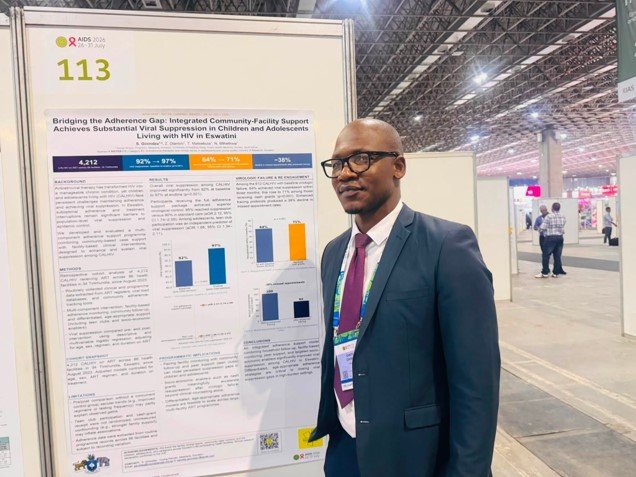
Tasekhaya: You recently presented your work at the International AIDS Conference in Rio. What did that moment mean for you professionally?
Sandile: It meant a great deal because I represented community cadres in rural Eswatini who may never attend such a conference, and a country more often discussed than heard.
Presenting rigorous research from our communities challenged the assumption that global health evidence flows only from north to south. Sharing the stage with three Young Heroes team members made it a true milestone in professional growth.
Tasekhaya: Young Heroes’ partnership with ECSA-HC is taking your community health model beyond Eswatini. How does it feel to see your work gaining regional recognition?
Sandile: It is humbling and reflects the Young Heroes team’s dedication. ECSA-HC’s regional interest validates that trained community cadres, equipped with simple digital tools and real-time data, can reach people beyond the reach of facilities. For Eswatini, exporting a model is significant. The recognition belongs to the workers who walk between homesteads daily; they built it, and we measured it so others could see its value.
Tasekhaya: You’re now pursuing a PhD in Epidemiology while leading technical programs. What keeps you motivated to continue learning?
Sandile: Curiosity—and a persistent question. Programme data showed adolescents and young people living with HIV doing well on treatment, then quietly stopping. My doctoral research at the University of KwaZulu-Natal examines predictors of virologic failure and viral rebound to identify those at risk before treatment fails. Studying keeps me humble: seniority can make experience feel like knowledge. I also want my children and team to see that learning never expires.
Tasekhaya: After 13+ years in public health, what does the next chapter of your career look like, and what legacy do you hope to leave?
Sandile: I want to close the gap between evidence and policy by turning data into insights decision-makers can act on, whether in government, a regional institution or academia. My legacy is people, not projects: the analysts I have trained, cadres who use their own data, lasting systems, and young Emaswati inspired to follow their curiosity about numbers.


0 Comments