A Young Eswatini Doctor’s Vision for a Stronger Healthcare System
BY TASEKHAYA DLAMINI
Driven by a purpose far greater than personal achievement, a young Eswatini medical professional is leveraging her international training, from clinical studies in Russia to advanced coursework in International Health in Taiwan, to transform healthcare delivery back home. Having witnessed firsthand the necessity of robust health systems, equitable policy, and accessible resources, she reflects in this interview on the lessons shaping her journey and her bold vision for strengthening public health across Eswatini.
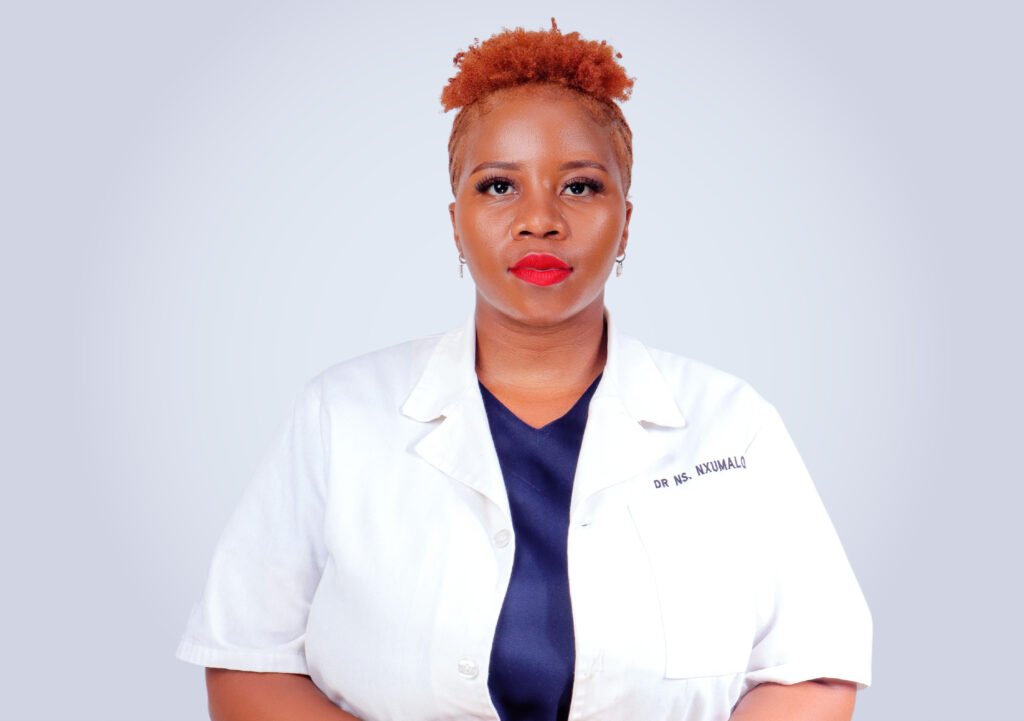
Tasekhaya: What inspired you to study medicine abroad, and what was the biggest lesson you brought back to Eswatini?
Dr Nomfundo: “I always knew I had to become a doctor. I had no other choice, really!” she recalls, explaining how her mother, a nurse, influenced her ambitions from a young age.
Studying abroad was ultimately her mother’s decision. Having experienced the challenges of nursing, her mother was determined that none of her children would follow the same path. With limited local options for medical training at the time, she encouraged her daughter to pursue medicine abroad, despite having initially been accepted to study nursing science at SANU.
“Despite all the challenges, ten years later, here we are!” Her international experience taught her adaptability, open-mindedness and appreciation for different perspectives. It also challenged her to distinguish between deeply held values and beliefs shaped by culture, encouraging understanding rather than judgement.
Tasekhaya: You gained experience across several medical disciplines during your internship. Which rotation challenged you the most, and how did it shape you as a doctor?
Dr Nomfundo: Psychiatry was particularly emotionally demanding. While diagnosing conditions such as bipolar disorder, schizophrenia and major depressive disorder, she was deeply affected by the personal experiences behind each diagnosis. “It made me realize that behind every diagnosis is a human being with a story, and sometimes, a story of pain that we may never fully understand.”
The experience strengthened her awareness of mental health challenges and substance use in communities, reinforcing the need for education, prevention and support. Emergency medicine also challenged and excited her through its fast-paced environment and the need for critical thinking. Together, these rotations taught her that good medicine requires empathy, teamwork, sound judgement and the humility to seek help when necessary.
Tasekhaya: As you pursue further studies in International Health, what do you hope to learn and bring back to Eswatini’s healthcare sector?
Dr Nomfundo: Her motivation for studying International Health comes from witnessing situations where doctors had the knowledge to treat patients but were constrained by systemic shortcomings. She recalls seeing Gogo from Lavumisa travel to Mbabane for medical care, only to be told she needed to purchase basic supplies such as normal saline and Panado despite lacking the money to do so.
“Sometimes, the problem is not that we do not know how to treat the patient; it is that the system does not adequately support us to provide the care the patient needs.” Through her studies, she hopes to strengthen her understanding of healthcare access, resource distribution, health financing and public health policy. Her long-term ambition is to use research and evidence-based interventions to improve healthcare delivery and ensure that access to essential services is not determined by where someone lives or what they can afford.
Tasekhaya: With your interest in health systems strengthening, what is one gap in Eswatini’s healthcare system you would like to help address?
Dr Nomfundo: She hopes to contribute to addressing gaps in healthcare access, resource allocation, health financing and public health policy. Drawing from her clinical experiences, she believes research and evidence-based approaches can help identify systemic weaknesses and develop sustainable solutions in collaboration with healthcare institutions and policymakers.
Tasekhaya: Having worked in primary healthcare, why do you believe it is so important to improve health outcomes in Eswatini?
Dr Nomfundo: She views primary healthcare as the foundation of an effective health system because it brings essential services closer to communities, supporting disease prevention, early diagnosis, treatment and health education. She believes that adequate staffing, essential medicines, sufficient funding and effective referral systems are critical to improving health outcomes and reducing pressure on hospitals.
Tasekhaya: Can you share a memorable experience in emergency care that changed the way you approach medicine or patient care?
Dr Nomfundo: Emergency medicine taught her the importance of rapid assessment, prioritising life-threatening conditions and working closely with a team. It strengthened her ability to remain calm under pressure while recognising her limitations. The experience reinforced her belief that timely decisions, clear communication and teamwork can significantly influence patient outcomes, while highlighting the importance of patient safety.
Tasekhaya: You have also been involved in youth and community leadership. How has this experience influenced the way you serve and connect with patients?
Dr Nomfundo: Her involvement as a youth leader at Holy Ghost Palace Ministries (HGP) has strengthened her understanding of empathy, communication and responsibility. These lessons influence how she approaches patients, reminding her to see the individual beyond the diagnosis. She believes doctors also have a responsibility to serve beyond consultation rooms through health education, community engagement and advocacy.
Tasekhaya: As a young female doctor, what challenges do women face in medicine and leadership, and what can be done to create more opportunities for them?
Dr Nomfundo: She identifies gender stereotypes, unequal leadership opportunities and the pressure on women to prove their competence as challenges in medicine. She advocates for mentorship, equitable opportunities and greater representation of women in leadership. As she continues to develop professionally, she hopes to inspire young women in Eswatini to pursue careers in medicine, research, policymaking and leadership with confidence.
Tasekhaya: You aspire to contribute to global health beyond clinical practice. What kind of impact would you like to make through research, policy, and international collaboration?
Dr Nomfundo: Her long-term aspiration is to improve health outcomes in Eswatini while contributing to regional and international efforts to strengthen healthcare systems. Through research, policy engagement and collaboration, she hopes to help develop practical solutions that improve healthcare delivery and make essential services more accessible.
Tasekhaya: For young people in Eswatini who dream of becoming doctors, what three things would you encourage them to focus on from an early stage?
Dr Nomfundo: Her advice centres on three principles: academic excellence, good character and purpose. She encourages young people to take their education seriously, cultivate compassion and integrity, and understand their motivation for pursuing medicine beyond the title.
“Seek opportunities, remain curious, and remember that success is not just about qualifications, but how you use your knowledge to serve others.”
FINALLY;
“One thing a young person can take from my journey is that your education can open doors, but your purpose should guide how you walk through them.”
Reflecting on her journey from studying medicine in Russia to gaining clinical experience in Eswatini and pursuing International Health in Taiwan, she sees every opportunity as preparation for greater service to her country.
Although her journey is still unfolding, her commitment remains clear: to connect medicine, public health and health systems strengthening to improve the lives of the people of Eswatini.
For her, the true measure of success will not simply be the qualifications she earns or the borders she crosses, but the difference she ultimately makes at home.


0 Comments