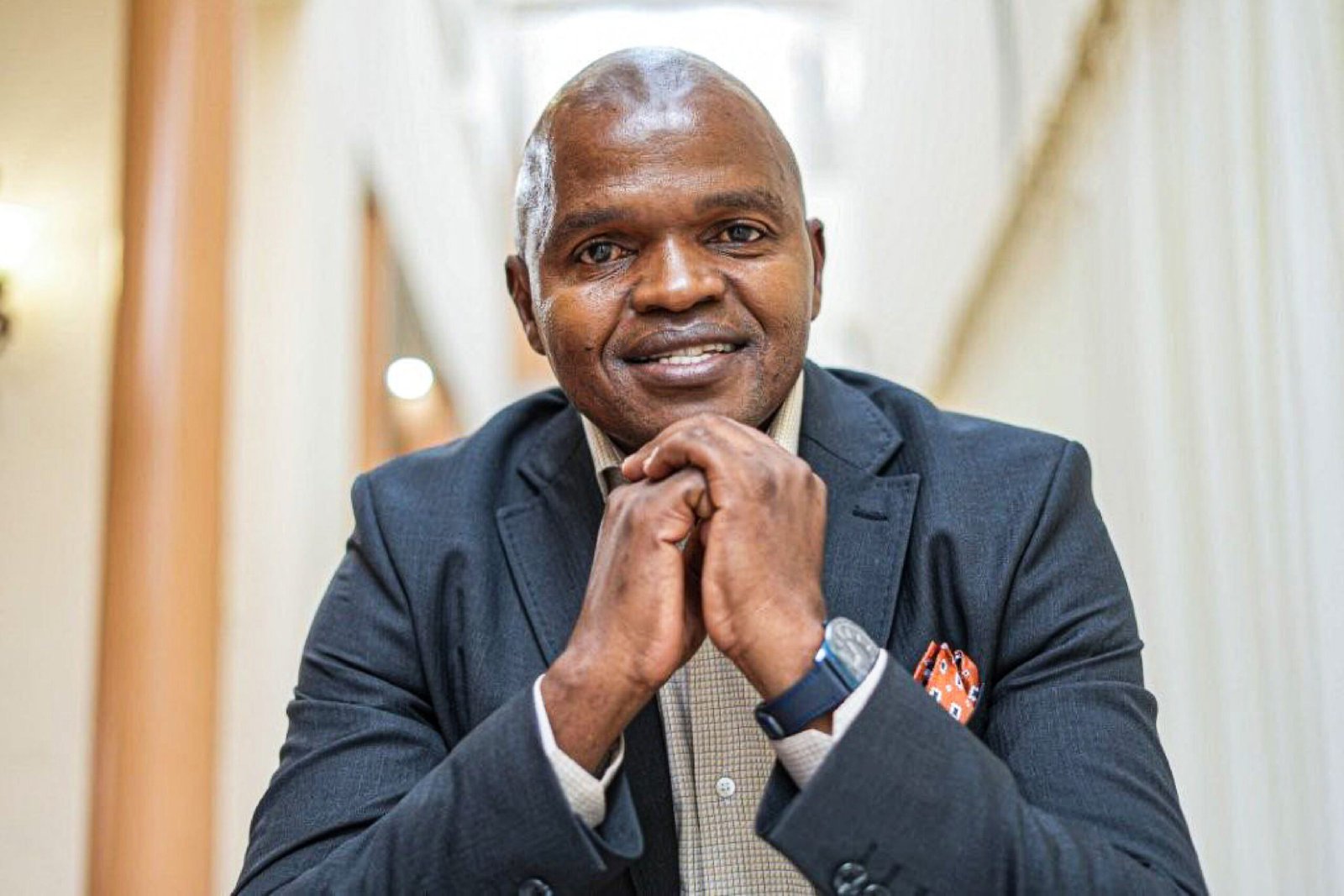
This week we spoke to Edwin Mbingo, and experienced human capital practitioner with extensive experience in construction, mining and health. This experience has shaped his leadership and goal-focused approach. We have more below.
Career Chat: Did you ever imagine building a long career in Human Resources?
Mbingo: I began my career as a plant-admin clerk at Inyatsi Construction before being promoted to materials hauling foreman in operations. From there, I moved into personnel management, which later evolved into Human Resources. Over time, I grew within the role. I eventually appointed Group Human Resources Manager.
Like many young emaSwati at the time, I had limited awareness of career possibilities. In high school, my dream was simply to become an accountant because I enjoyed the subject. Career guidance was limited then, so I had little exposure to other professions. Looking back, what some may call fate, I believe was destiny.
Career Chat: Starting your journey on a construction site must have given you a unique perspective. What lessons from those early days shaped the kind of HR leader you became?
Mbingo: I started in the plant department handling several administrative duties because the company was still small. There was no job description. I had to learn quickly and shape the role as I went along.
Those early experiences taught me initiative, adaptability, and accountability. I also developed skills in teamwork, communication, and managing people from diverse backgrounds. Most importantly, I learned to take ownership of my work even when the path was not clearly defined.
Career Chat: You spent 24 years as HR Manager at Inyatsi Construction. What kept you motivated and growing within the same organization for so long?
Mbingo: Inyatsi provided me with the opportunity to establish and develop a Human Resources function, addressing an area that had historically received limited attention in terms of people management. At the time, the personnel function mainly focused on payroll rather than strategic human resources.
The company also invested in my professional development by sending me for training at Institute of People Management (IPM) South Africa. Being trusted to learn, make decisions, and apply new knowledge kept me inspired. I felt a strong sense of gratitude and loyalty to the organization for believing in my potential.
Career Chat: While working full-time, you continued studying through several institutions. How did you balance work, family, and academic life?
Mbingo: Balancing work, family, and studies requires discipline and purpose. Once I discovered my passion for Human Resources, I became committed to continuous learning.
Over the years, I obtained an Advanced Diploma in Human Resource Management from UNISA, a Diploma in Labour Law from the Global Institute of Management and Technology, and a BCom Honours from the Management College of Southern Africa. I also completed a Management Development Programme with Stellenbosch University and several professional certificates. Currently, I am completing my MSc thesis in Human Resource Management with Botho University.
Career Chat: Many people think HR is only about hiring and firing. From your experience, what does the role of a great HR professional look like behind the scenes?
Mbingo: Human Resources goes far beyond recruitment and disciplinary processes. A great HR professional works to create an environment where employees can thrive, and organizations can perform effectively.
The role involves people management, strategy, mentoring, coaching, and sometimes resolving conflicts. It is about aligning the goals of employees with the vision of the organization. When HR works well, employees feel supported, leaders are guided, and the organization operates smoothly.
Career Chat: You later served as HR Manager at Maloma Colliery and Sakhalive. How did these different environments shape your leadership approach?
Mbingo: Moving to Maloma Colliery was a major transition because it introduced me to the mining industry and a rural working environment. It also gave me the opportunity to engage closely with local communities and manage labour relations in a unionized setting.
Later, working at Sakhalive Joint Venture exposed me to an international corporate environment with different systems and cultures. These experiences strengthened my ability to adapt, manage diverse teams, and work effectively across different organizational cultures.
Career Chat: After decades in corporate leadership, you later moved into HR consulting. What inspired that transition?
Mbingo: After many years in corporate leadership, I felt a desire to share my knowledge and experience with a wider range of organizations. Consulting allows me to support different businesses in building strong HR structures and developing effective people management strategies.
Working as an HR consultant at Psalms Ltd has exposed me to various industries and organizational challenges. It requires understanding each organization’s culture and tailoring solutions that help improve both people management and performance.
Career Chat: You are currently serving as HR Manager at NERCHA. What has this experience been like?
Mbingo: Working at NERCHA has been a unique and rewarding experience. The health sector presents different challenges compared to the private sector, but the core principles of HR remain the same.
My role continues to focus on people management, strategy, and labour relations. It is fulfilling to be part of an organization that plays an important role in addressing national health challenges and supporting the goal of achieving an HIV-Free Eswatini by 2030.
Career Chat: Throughout your career, you have mentored many professionals. What qualities separate good employees from truly outstanding ones?
Mbingo: Outstanding employees go beyond performing their basic duties. They take initiative, remain consistent, and show a strong commitment to learning and self-improvement.
They are proactive, adaptable, and willing to take responsibility. Strong communication, integrity, and teamwork are also essential. Ultimately, outstanding professionals elevate those around them and contribute meaningfully to the success of their organizations.
Career Chat: Lifelong learning is one of the pointed themes emerging in your career journey. Why has continuous learning been so important to you?
Mbingo: The world is constantly changing, and professionals must continue learning to remain effective and relevant. Lifelong learning allows us to adapt, understand emerging trends, and contribute effectively to our organizations. For me, education has always been about growth and impact. By continually developing my knowledge and skills, I can mentor others and help organizations become stronger and more resilient.
Career Chat: What advice would you give to young people in Eswatini who want to build careers in leadership and people development?
Mbingo: Young people should take time to understand their strengths while remaining open to new opportunities. They should seek knowledge, mentorship, and practical experience wherever possible.
Leadership is not defined by titles but by influence, service, and integrity. With resilience, faith, and commitment to growth, young people can build meaningful careers and contribute positively to their communities and organizations.
Career Chat: As an experienced HR professional, what advice would you give to aspiring professionals searching for the “right” employer?
Mbingo: Every successful career begins with baby steps. Young professionals should not underestimate the value of starting from humble beginnings and learning from every opportunity.
It is important to commit fully to your responsibilities, take accountability for your actions, and work well with others. Often, attitude, adaptability, and willingness to learn are just as important as qualifications when it comes to career growth.
Career Chat: Can you briefly share your experience serving in professional bodies?
Mbingo: Throughout my career, I have served on several committees and boards related to labour relations and governance. These include the Building & Construction Wages Council, the Mining & Quarrying Wages Council, and the Labour Advisory Board.
I have also served within the Eswatini Business Health and HIV/AIDS Coalition, where I chaired the Remuneration Committee, and as a founding director of the Business Federation of Eswatini. Additionally, I have been actively involved with the Institute of People Management Eswatini, where I have supported mentoring and coaching young professionals.

0 Comments