
This week we spoke to Msutfumswati Nkambule who talked about his entrepreneurial journey behind Besutfu Beef and Bliss Burgers. The founder discusses the often-overlooked opportunities in agribusiness.
Nkambule is driven by the desire to create jobs and community impact in Eswatini and envisions building a fully integrated value chain that can compete on the global stage. We have more below.
Career Chat: Your journey from running a small feedlot to supplying premium beef and co-founding Bliss Burgers is inspiring. What was the turning point that made you believe this could become a serious business?
Nkambule: The turning point came when my business partner and I were accepted as vendors at the MTN Bushfire Festival and the Luju Festival in 2025. This festival attracts thousands of people over a single weekend, and participating in them helped us see the real demand for our products. Watching people line up for our burgers showed us that there was strong market potential when quality beef is paired with a good customer experience.
That moment changed how we viewed our businesses, Besutfu Beef and Bliss Burgers. It helped us realize that agriculture does not only end at production; it can extend into value-added products that reach consumers directly. The experience pushed us to think more seriously about scaling our operations and building a strong farm-to-consumer model.
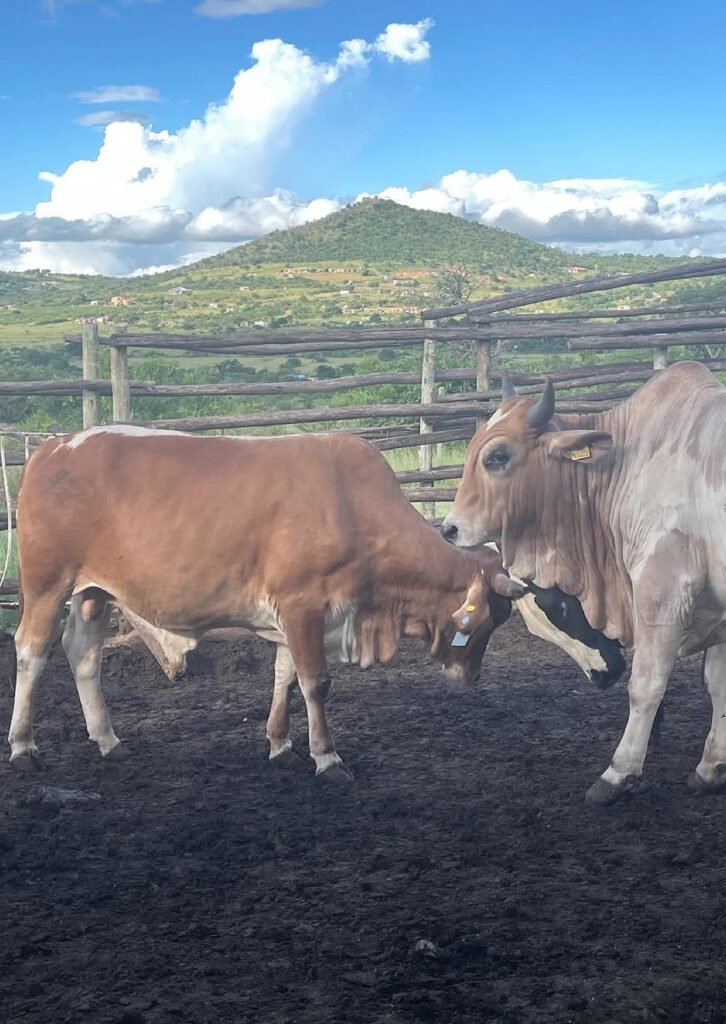

Career Chat: Many young people see agriculture as old-fashioned. What made you choose agribusiness, and what opportunities are young entrepreneurs missing in this sector?
Nkambule: I chose agribusiness because it focuses on producing food, which is one of the most essential needs in society. The demand for food is constant, which makes agriculture a stable industry with long-term potential. In livestock production, businesses can grow naturally over time as herds expand and productivity increases.
Many young entrepreneurs overlook the opportunities across the agricultural value chain. Beyond farming, there are opportunities in processing, packaging, distribution, and food businesses. Agriculture requires patience, but those who approach it with discipline and long-term thinking can build sustainable and impactful businesses.
Career Chat: Besutfu Beef has grown to supply beef and serve thousands of burgers at major festivals. What were some of the biggest challenges you faced scaling your business?
Nkambule: One of the biggest challenges was managing multiple responsibilities with limited resources. In the early stages, we did not always have the financial capacity to hire specialists for every role in the business. As a result, my business partner and I had to handle many aspects of the operation ourselves.
At different times we found ourselves acting as managers, marketers, accountants, logistics coordinators, and sometimes even cooks. While it was demanding, it helped us understand every layer of the business. Those experiences-built resilience and prepared us to handle greater opportunities as the business continues to grow.
Career Chat: You are currently studying Law and Negotiation for Global Trade in Taiwan. How do you see global trade shaping the future of African agribusiness?
Nkambule: Global trade has the potential to significantly expand opportunities for African farmers. Many producers work hard to produce quality food, but their markets are often limited to their local communities or national borders. Access to international markets can create greater demand and increase the value of agricultural products.
When farmers participate in global markets, it encourages improvements in quality standards, efficiency, and production systems. My studies focus on understanding trade agreements and negotiation processes so that I can contribute to creating pathways that connect African farmers to international markets.
Career Chat: Entrepreneurship often looks glamorous from the outside. What are some realities or sacrifices people rarely talk about?
Nkambule: Entrepreneurship comes with a high level of uncertainty. Income is not always consistent, especially in the early stages of building a business. There may be periods when business performs well and other times when revenue is limited.
Building a business also requires personal sacrifices, including long hours, financial risk, and the discipline to keep working even when results are not immediate. Success in entrepreneurship requires patience, resilience, and a strong commitment to the long-term vision.
Career Chat: For young entrepreneurs who want to enter the food or agribusiness industry but have limited capital, where should they start?
Nkambule: One practical way to start is by gaining experience working in an established agribusiness. This allows aspiring entrepreneurs to learn how the industry operates and understand the challenges involved before starting their own ventures.
At the same time, it is important to save money and build networks within the agricultural value chain. Starting small with personal resources often allows entrepreneurs to grow gradually while gaining valuable experience and reducing risk.
Career Chat: You’ve spoken about entrepreneurship being a responsibility, not just a business. What impact do you hope to create in Eswatini through your work?
Nkambule: One of my biggest motivations is creating employment opportunities. Businesses can support families, build skills, and strengthen communities. Through entrepreneurship, it is possible to contribute to economic growth while helping address unemployment.
This perspective was reinforced when I attended an event organized by the African Union in Addis Ababa in 2025, where discussions focused on job creation across Africa. Experiences like that remind me that entrepreneurship can have a broader social impact beyond personal success.
Career Chat: Looking ahead, what is your long-term vision for Besutfu Beef and African agricultural products on the global stage?
Nkambule: My long-term vision for Besutfu Beef is to build a fully integrated value chain that extends from production to processing and retail. Starting with feedlot production, we aim to eventually establish our own abattoir and develop butcheries that supply high-quality local beef.
Beyond the domestic market, we hope to expand into regional and international markets. More broadly, I want to see African agricultural products compete globally and create greater opportunities for farmers across the continent.



0 Comments