BY TASKEHAYA DLAMINI
This week we spoke to Fanelesiyibonge Mabuza who share interesting aspects of his career journey from Agricultural Biosystems and Engineering to technology and entrepreneurship. Let’s dive in.

TASEKHAYA: Your academic journey began in Agricultural Biosystems and Engineering at the University of Eswatini, yet today you are deeply involved in technology, and entrepreneurship. What inspired this transition into tech space?
FANELESIYIBONGE: I was inclined towards scientific and technology topics and/or subjects from a young age. I grew up seeing how the age of the internet changed the way we lived and watched the introduction of innovative ideas to the world. So inevitably, I wanted to be part of that. In my last year at UNESWA, I started a blog “Eswatini Scientific” where I would write about scientific and innovative topics that I found interesting. From there, it has been just building and doing things I find interesting and occasionally an innovative entrepreneurial venture.
TASEKHAYA: You later expanded your knowledge through programs with the Internet Society focusing on computer networking and telecommunications. How did these studies shape your technical foundation and career direction?
FANELESIYIBONGE: I joined the Internet Society out of curiosity and likeness to their advocacy for “internet for all.” I was hoping to advocate for cheaper internet in the country. I found out they offered free lessons which I enrolled in, not necessarily as a career change but from sheer curiosity and “why not.” Later, I realized that it got me comfortable with tech terms and made me realize how easy one can teach themselves a new skill.
TASEKHAYA: Your professional journey started as an Assistant Mechanic. How did that hands-on experience influence the way you approach problem-solving and innovation today?
FANELESIYIBONGE: Being a mechanic was a no-brainer for me. I had always enjoyed the mechanically inclined courses at university. Working as a mechanic is no easy task, especially in heavy plant, where every stoppage costs a lot of money. Quick problem solving becomes essential rather than second thought. After working for a couple of years, I observed a consistent problem across clients and the automotive industry, which led to the innovation that is Carfinity AutoCare.
TASEKHAYA: As a former Google Developer Student Lead with the Student Clubs, what role did that experience play in developing your leadership and technical skills?
FANELESIYIBONGE: The Google Developer Student Club was an attempt to create a vibrant tech community where we share ideas and collaborate. This was after I was home alone trying to teach myself how to write code. I went on to learn more than that, I got exposed to a community of innovative Africans and got to discover my leadership skills. I got to experience the other side of leadership where you are expected to deliver on expectations whilst managing different personalities. I also got valuable leadership training and practice that I take with me in whatever I do.
TASEKHAYA: You have also worked remotely as an Equitech Scholar with Equitech Futures. What insights did you gain from working within a global tech learning environment?
FANELESIYIBONGE: For three months, I was part of the Data Science Institute of ExploreAI Futures. It was great exposure to how tech communities and learning environments work. As I was part of the data science institute, I got insights into how to make data-driven decisions and how data drives AI and development. I also got the chance to learn how to use various tech tools to improve work productivity.
TASEKHAYA: You previously founded the startup “The New Vibe,” which concluded in 2025. What lessons did that entrepreneurial journey teach you about building and sustaining startups?
FANELESIYIBONGE: I got to learn the value of failing fast and failing forward. Building a startup is no easy task, but building a startup in Eswatini and building an MVP is a very difficult task. Building a product, taking it to market for validation, and moving forward in a short space of time were the most valuable lessons I learnt. It saves you as a founder a lot of time and allows one to focus on activities that will yield better results.
TASEKHAYA: You are currently the founder of Carfinity AutoCare. What inspired the idea behind this venture, and how are you using technology to innovate within the automotive space?
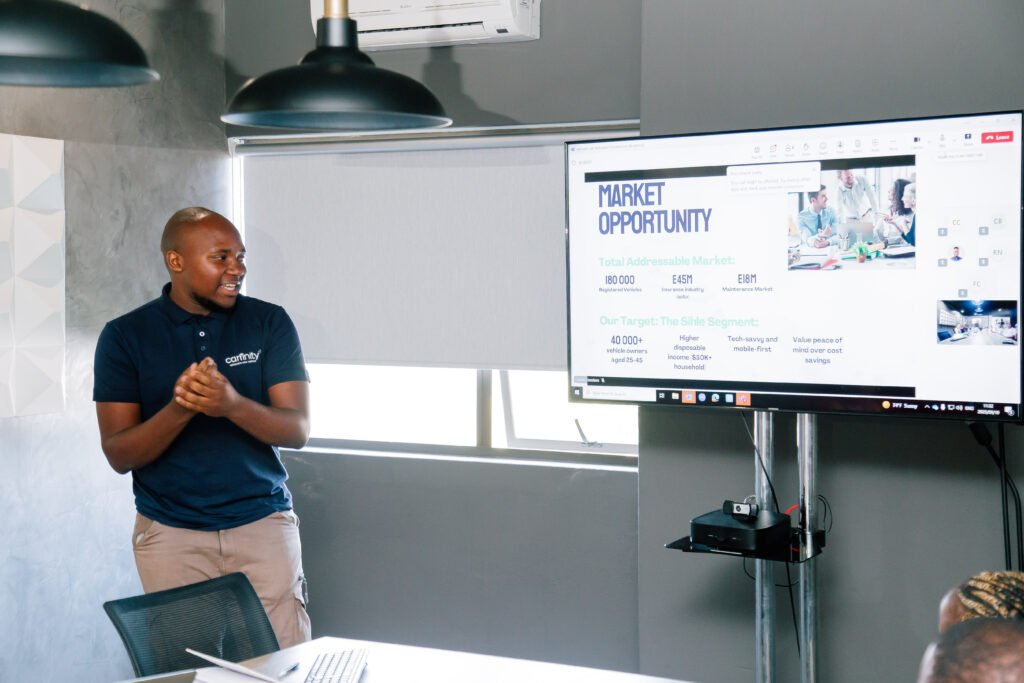
FANELESIYIBONGE: I got the idea for Carfinity when my sister was scammed after her vehicle broke down while she was on her way to work. I also observed this happening to many other people I knew. So, I wondered if there was a way to introduce preventative maintenance reminders for vehicle owners and connect them with vetted mechanics who would not try to scam them at every opportunity. That is how Carfinity Autocare came about. Carfinity is going to use technology to bring professionalism and trust into the automotive space. We aim to change the culture of how people look at and manage their cars.
TASEKHAYA: How important are certifications and continuous learning in staying relevant in the fast-moving tech industry?
FANELESIYIBONGE: For me, it is a matter of staying curious and up to date. When one can remain relevant and informed about technology, they are better positioned to identify opportunities worth exploring.
TASEKHAYA: Being recognized as a finalist in the Oracle Innovation Lab highlights your innovation potential. What project or idea earned you that recognition?
FANELESIYIBONGE: The Carfinity Autocare project earned me a spot in the Oracle Innovation Lab. It has allowed me to take an idea that was still rough around the edges and shape it into something that can be developed into a valuable business case
TASEKHAYA: For young people in Eswatini who want to enter technology, cybersecurity, or build startups, what mindset and practical steps would you recommend they take to succeed?
FANELESIYIBONGE: Staying curious is one of the best principles I can recommend. Always seek to understand how things work and why they exist. For young people like me, I encourage looking beyond money. If you are trying to build something that generates money from the outset, it may not always work. Instead, do it for the passion of building something from scratch and seeing it through to completion. That process will build your skills, teach patience, and, in some cases, allow enough time for your project to develop to a stage where it is validated and makes business sense.



0 Comments