BY TASEKHAYA DLAMINI
This week we spoke to Fezokuhle Ncedile Khumalo who takes us through her career in public health and scientific research, inspired by a curiosity about the human body and firsthand experience with disease burdens in Eswatini. Let us dive in.
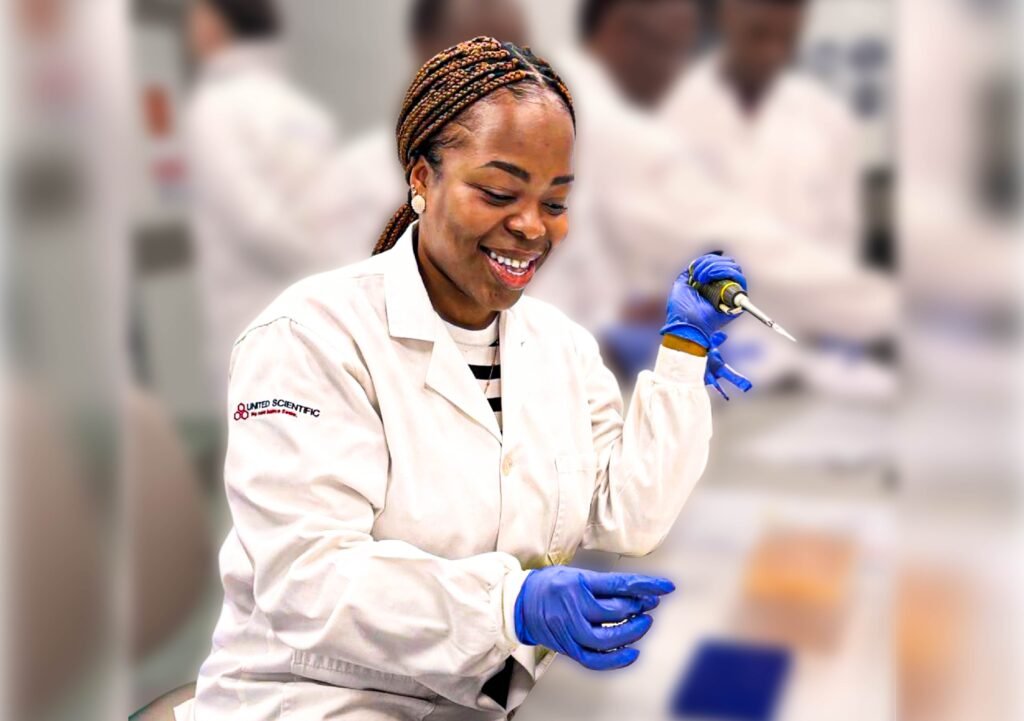
Tasekhaya: Your academic journey spans institutions across the world. What first sparked your passion for public health and scientific research?
Fezokuhle: I’ve always been an inquisitive child, with a deep curiosity about the human body, how it works, why it fails, and what keeps it functioning. My initial interest in this subject led me to pursue a career in science. However, my passion for public health truly took shape later, when I began to see the gap between scientific knowledge and real-world outcomes. I became increasingly interested not only in disease at a molecular level, but in why, despite advances in science, so many communities still experience preventable illness and inequitable access to care. I realised that science alone is not enough, it is how we translate science into accessible, effective systems that truly matters. That shift ultimately anchored my path in public health and research.
Tasekhaya: You studied Biology and Neuroscience before moving into Medical Virology and later Epidemiology with a focus on Implementation Science. How did your interests evolve across these different fields?
Fezokuhle: My journey has unfolded quite organically. During my undergraduate studies, I pursued Biology and Neuroscience, but I also found myself unexpectedly drawn to Religion. I took a class called Religion and Science out of curiosity, within the flexibility of the liberal arts system, and completely fell in love with it. As both a scientist and a Christian, it gave me space to explore questions I had always held about meaning, existence, and the intersection between faith and science. I later pursued it as a minor, and for my capstone project, I explored the idea of locating God in the brain.
I then moved into Medical Virology for my master’s during the COVID-19 pandemic, where I developed a candidate COVID-19 vaccine. While that experience was formative, it also left me with a key frustration: the science we worked so hard to produce often remained in the lab, far from the communities that needed it most.
That realisation led me to Epidemiology and Implementation Science, where I found my footing. It allowed me to focus not just on discovery, but on delivery, ensuring that scientific advancements translate into real, accessible health solutions.
Tasekhaya: Many of your academic achievements were supported by scholarships. What mindset and strategies helped you access and make the most of these opportunities?
Fezokuhle: Scholarships supports all my academic pursuits. A strong sense of purpose has consistently supported and guided me throughout that journey. I have always been clear on my “why”; why I am pursuing each opportunity and what I hope to contribute, and that clarity has helped me tell my story in an authentic and intentional way. At a personal level, my faith has grounded me in the belief that what is meant for me will not miss me. That perspective gives me both peace and courage to apply boldly while trusting that the right opportunities will align.
Of course, the process comes with challenges, and I have faced rejection along the way. But I’ve learned to keep going, refining my approach and being intentional about applying for opportunities that truly align with who I am. Once I receive an opportunity, I fully immerse myself, seeking mentorship, building relationships, and making the most of the experience.
Tasekhaya: Early in your career you explored diverse roles, from working as a Resident Assistant to internships with organizations. How did these early experiences shape your professional direction?
Fezokuhle: My journey has not been linear. But looking back now, it all makes sense. One lesson that has stayed with me is to bloom wherever you are planted. At the time, some of the roles I took on didn’t seem connected to where I was headed, but each one shaped me in ways I now deeply value.
Straight after high school, I worked as a fuel management officer, tracking fuel usage for a fleet of trucks. I didn’t realise it then, but that was my first exposure to monitoring systems and accountability. Later, working as a social media intern at MTN — with a biology degree — felt unexpected, but it opened my eyes to innovation, community engagement, and the incredible talent among young people in Eswatini. Volunteering with the World Bank grounded me in rural communities and strengthened my connection to people, even strengthening my siSwati. And roles like being a Resident Assistant and working in the library taught me something simple but powerful; that everyone is carrying something, and kindness and empathy go a long way. My time at Georgetown University then brought everything together, allowing me to turn what I had learned into meaningful, real-world impact.
Tasekhaya: You have worked in both laboratory and field research environments. What insights did these experiences give you about the fight against infectious diseases?
Fezokuhle: It’s taught me that scientific breakthroughs alone are not enough. In the lab, you see innovation and discovery, but in the field, you see the realities of implementation, where access, systems, and human behaviour determine impact.
One key insight is that the fight against infectious diseases requires us to move faster, and more importantly, to work in a coordinated and integrated way. Too often, efforts happen in silos across disciplines and sectors, which slows progress and limits impact. To respond effectively, especially in high-burden settings, we need approaches that are connected, from research and policy to community-level delivery.
Tasekhaya: Your work has also involved global health research with institutions such as Georgetown University Center for Global Health Practice and Impact. What does your current work in health policy and systems research involve?
Fezokuhle: My work focuses on understanding how health systems function in practice, and how we can strengthen them to deliver better outcomes for communities. At its core, it is about bridging the gap between evidence and implementation, ensuring that what we know works reaches people in a meaningful and sustainable way.
My current work has expanded to focus on designing and leading implementation research that examines patient pathways, service delivery gaps, and opportunities to improve access to care in disease areas such as HIV/TB, maternal health, and non-communicable diseases.
This involves combining data analysis with field-based insights and working closely with government and partners to inform policy and programme design.
Tasekhaya: As someone deeply involved in implementation science, how do you translate research findings into real-world health interventions that benefit communities?
Fezokuhle: A simple way I often think about implementation science is through COVID-19. We had the science, from from vaccines to prevention strategies, but the real challenge was making sure that people could access, trust, and use those solutions in their everyday lives. We all know how hesitant people were to vaccinate, right?
In my work, I focus on closing that gap. I start by understanding how people move through the health system. I ask where they get lost, where delays happen, and what barriers they face. From there, I work with healthcare providers, communities, and all relevant stakeholders to design practical solutions that fit within existing systems, rather than sitting outside of them. It’s a very hands-on process, testing what works in real settings, learning quickly, and adapting along the way. For me, it’s less about producing perfect solutions, and more about building ones that work for their intended recipient.
Tasekhaya: You’ve also contributed to public discourse as a guest columnist at the Eswatini Observer. Why is it important for scientists and researchers to communicate their work to the broader public?
Fezokuhle: It really taught me that science means very little if people don’t understand it. There is no point in doing all this work, publishing papers, and then only speaking to other scientists who already know the language. The real impact comes when you can explain your work in a way that makes sense to everyday people, and even better, in a way that connects to their lived realities.
Tasekhaya: Being recognized as a Principal Investigator and receiving the Royal Society of Tropical Medicine and Hygiene Early Career Grant is a major milestone. What research are you currently leading, and what impact do you hope it will have?
Fezokuhle: Receiving the Royal Society of Tropical Medicine and Hygiene Early Career Grant was a huge milestone for me. I have since completed that work. The study looked at why many men in Eswatini start HIV treatment, then stop along the way, and what brings them back into care.
What that experience really showed me is that people do not fall out of care because they do not want to be healthy. Instead, it is often because the system does not support them consistently.
That thinking led into the work I’m now focused on, including building SmartPath. SmartPath is a program designed to tackle iron deficiency and anaemia among women, starting from adolescence through to pregnancy. We focus on four key things: raising awareness early, making detection easier and more accessible, ensuring women are properly monitored over time, and making sure treatment works and is followed through.
The idea is to create a continuous, connected pathway of care, so that women are not just diagnosed, but supported all the way through. It’s about preventing avoidable complications for both mothers and their children and making care more proactive rather than reactive.
Tasekhaya: What advice do you have for young people in Eswatini pursuing science or global health careers on education, scholarships, and career development?
Fezokuhle: I would say, first, stay grounded in something bigger than yourself. For me, that is my faith in God. But, for others, it may look different. That grounding gives you stability, especially when things don’t go as planned.
Secondly, pay close attention to the people who come into your life. Some will mentor you; some will guide you, and others will simply open a door that changes everything. I have been blessed with mentors at different stages of my journey, people like Fanele Chester and Prof Samson Haumba, as well as people like Landokuhle Dlamini, who I often describe as a “destiny shaper” because she connected me to an opportunity that changed my path. So, build relationships, don’t burn bridges, and value the role each person plays.
Finally, focus on your path, and don’t be afraid of hard work. Building a meaningful career requires you to do hard things. Stay curious, keep learning, and be proactive about growing your skills. Don’t be afraid to be a beginner. You will fail at times but fail forward. Learn quickly, get back up, and keep going.

0 Comments