BY TASEKHAYA DLAMINI
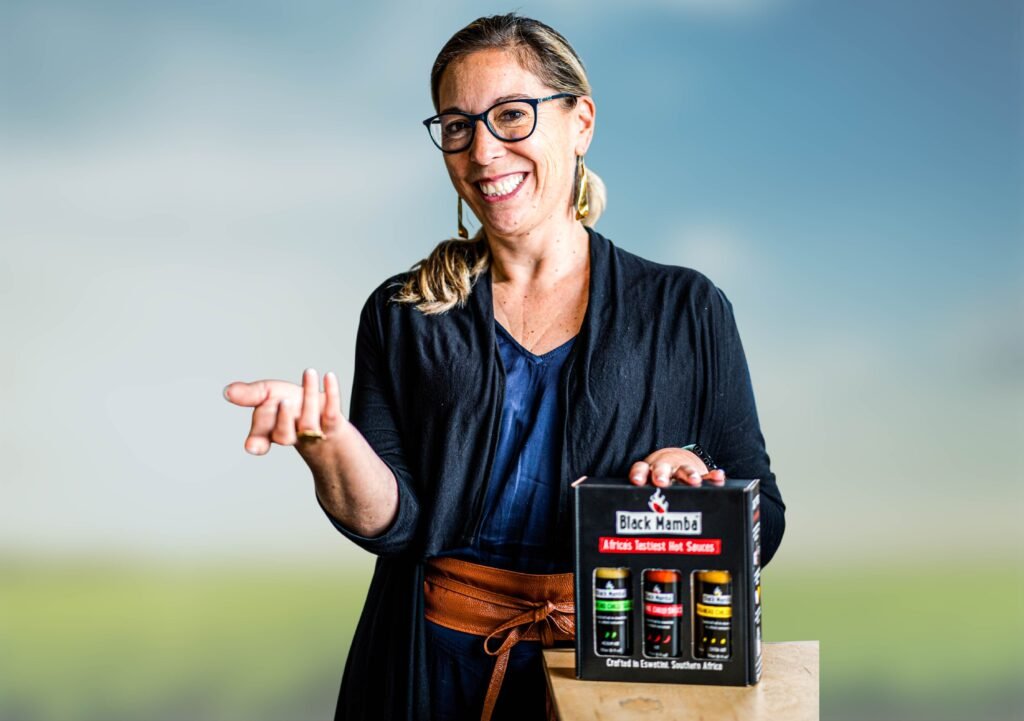
Claudia Castellanos, CEO of Black Mamba, came to Africa searching for meaning. She found it in chilli fields, farming communities, and in the quiet power of building something that genuinely and sustainably changes lives.
What started as a volunteering journey became Black Mamba Foods, a proudly Eswatini-grown brand now stocked internationally and linked to global names, while remaining deeply rooted in local farmers, sustainability, and impact.
But behind the growth is a bigger story: one about purpose, courage, failure, identity, and redefining success beyond profit.
In this candid conversation, she reflects on leaving corporate Europe, building a brand in Eswatini, and why meaningful entrepreneurship is never as glamorous as people think.
TASEKHAYA: You left the boardroom for chilli fields in Eswatini, what happened in that moment where comfort lost and purpose won?
CLAUDIA: It wasn’t one dramatic moment. It was a combination of things that collided around my 30th birthday. Turning 30 makes you reflect on whether your life matches what you imagined it would be. I realised I wasn’t doing anything meaningful for the world, and that feeling stayed with me.
Then there was Africa. I’d visited Kenya years earlier on safari, and something about the continent stayed with me. When I started looking for volunteer opportunities, Eswatini was the first one that came up. Looking back now, it feels less like a decision and more like something that was waiting for me.
TASEKHAYA: From Europe to Eswatini, corporate to community, what’s one lesson life forced you to learn that no degree ever could?
CLAUDIA: That relationships are the business. Not networking. Not transactional relationships. Real human relationships.
I’ve learned to genuinely care about the people I work with and to stay curious about their lives and experiences. That changes how you lead and how you build.
The other lesson was patience. In Eswatini, things move differently. Trust takes time. Early on, that frustrated me because I came from environments where everything moved quickly. But now I understand that anything meaningful takes time.
TASEKHAYA: What’s one “perfect” business strategy that completely failed in real life?
CLAUDIA: The US market. We thought we had everything figured out, the product, the research, the story. On paper, it looked perfect. What we underestimated was the complexity and cost of doing business there. The US doesn’t just test your product. It tests your patience, your capital, and your assumptions about what being “ready” actually means. We had to completely rethink our approach. That experience humbled us, and that humility now shapes every decision we make.
TASEKHAYA: You work with farmers and global brands like KFC; how do you stay true to your mission when the stakes get bigger?
CLAUDIA: By never letting the brand become abstract. When you’re in conversations with corporate procurement teams, it’s easy to start sounding like every other supplier. I don’t want that. I talk about the farmers, about Fair Trade, and about making good food, good for consumers, good for the planet, and good for the people growing it. Purpose isn’t a marketing line for us. It’s the reason the business exists. If a partnership doesn’t honour that, it’s not the right partnership.

TASEKHAYA: Seeing Black Mamba on menus and shelves internationally, did it feel like “we made it” or “now the real pressure begins”?
CLAUDIA: Both. There’s definitely a moment of wonder. A chilli sauce made in Eswatini, using produce from local farmers and local women, sitting beside global brands, that’s special. But that feeling passes quickly when you’re a founder. What replaces it is responsibility. Responsibility to the farmers, the team, the customers, and everyone who believed in the business early on. “We made it” is a moment. The pressure that follows is daily.
TASEKHAYA: Corporate life teaches structure, entrepreneurship tests everything, what’s one habit you kept, and one you had to unlearn?
CLAUDIA: I kept discipline around numbers. Cash flow doesn’t care about passion. Understanding your finances is critical because impact can’t survive without sustainability. What I had to unlearn was the need for consensus before making decisions. Corporate environments train you to align, consult, and seek approval before moving. Entrepreneurship forces you to make decisions quickly, learn from mistakes, and keep moving.
TASEKHAYA: You’ve seen the food industry from the inside, what’s one truth about food that would make people pause?
CLAUDIA: That “affordable” food almost always means someone else is paying the hidden cost. Usually it’s the farmer, the land, or the workers involved in producing it. If we factored environmental damage, exploited labour, and community impact into food pricing, the system would look very different. The food industry has become very good at hiding the real costs of what we eat.
TASEKHAYA: “Impact” is a buzzword today, but what does real prosperity look like for the farmers you work with?
CLAUDIA: It looks like dignity. We work with farmers who are proud of what they grow and proud that they can feed their families better because of what they’ve learned. One of the women we work with retired from civil service and joined our farming network to support her grandchildren. Through farming, she was able to provide for them without leaving her homestead. But what surprised me most wasn’t just the income. It was the sense of purpose and community. Women speak about the mental health benefits of working together in the fields, sharing knowledge, and building something collectively. That’s real prosperity to me.
TASEKHAYA: After all the global exposure, why choose to build in Eswatini?
CLAUDIA: Because this became home. I fell in love with the people, the rhythm of life, and the sense of community here. My husband is Swazi, and my children are proudly Swazi and Colombian. But there’s also a business reason. Eswatini is small enough that impact is visible. When something works, you can actually see the difference it makes in families and communities. That sense of visible impact is incredibly powerful.
TASEKHAYA: If someone is stuck between playing it safe and chasing something meaningful, what would you say?
CLAUDIA: First, there’s nothing wrong with stability. Entrepreneurship is hard, uncomfortable, and often lonely. But if you genuinely feel called to build something meaningful, then follow that conviction. Just don’t do it purely for money. When things get difficult—and they will—money won’t sustain you. Passion will.
I always think about the Japanese concept of ikigai: the intersection between what you love, what you’re good at, what the world needs, and what you can be paid for.
That’s where meaningful entrepreneurship lives. One of my mentors once told me building a business is like building a plane while flying it. It’s terrifying. But it’s also the most thrilling thing I’ve ever done. And in the end, success doesn’t belong to the person with the best idea. It belongs to the one who refuses to give up.



0 Comments